
Things to see in Bourges
Bourges layers a medieval townscape over a much older settlement. Known as Avaricum in antiquity, it was the capital of the Gallic Bituriges Cubes. Its cathedral, timber-framed streets, museums, formal gardens and cultivated marshes reveal different chapters of that long history.
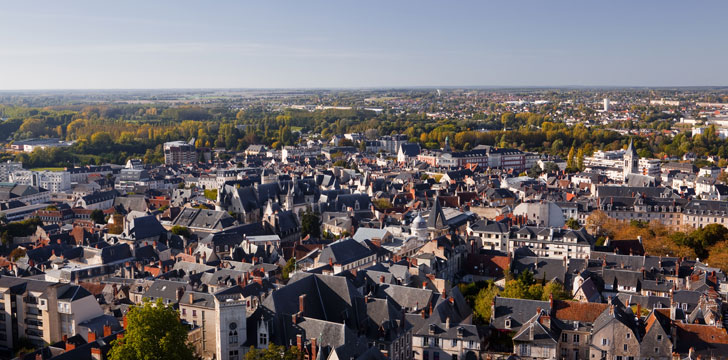
The old town
A major fire in 1487 destroyed between 1,000 and 2,000 wooden houses in central Bourges. Reconstruction followed quickly, and more than 440 houses from the period between 1487 and 1520 survive in the old town. Many are narrow buildings, typically under six metres wide but extending 10 to 20 metres back from the street. Shops occupied the ground floor and living quarters the level above.
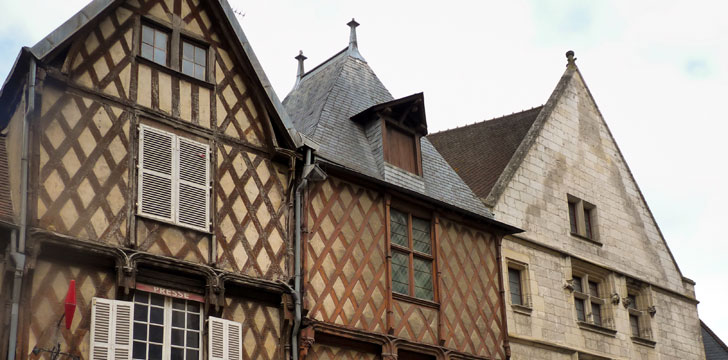
Corner houses sometimes rise to two storeys, with carved Gothic timbering arranged in diamond or saltire patterns. Seen together, these buildings make the rebuilding after the fire a visible part of the city rather than a single isolated monument.
Saint-Étienne Cathedral and its surroundings
Saint-Étienne Cathedral was built between 1195 and 1230. Its design was unusual for the period because it has no transept, and its west front is articulated by five sculpted portals. The cathedral has been on UNESCO’s World Heritage List since 1992. A massive buttressing pier supports the south tower, which had shown cracks since the thirteenth century. The north tower collapsed in 1506 and was rebuilt in Gothic form with Renaissance decoration.
The Archbishop’s Garden lies at the foot of the cathedral. Its older section follows a seventeenth-century design attributed to a pupil of Le Nôtre and was laid out by the gardener Coudreau in 1730. A lawn, flower beds, clipped hedges and mature trees give it a formal structure. Nineteenth-century additions include a bandstand and four monumental bronze vases representing the seasons.
The adjoining former archiepiscopal palace began with a commission from Bishop Phélypeaux de La Vrillière to the architect Pierre Bullet in 1679. Only the south wing of the proposed complex was built. Bourges acquired it in 1909, and it served as the town hall until 1992; municipal ceremonial rooms and the Musée des Meilleurs Ouvriers de France remain within the building.
Art in historic buildings
The Musée Estève occupies the Hôtel des Échevins. Displays across its three floors follow the career of twentieth-century painter Maurice Estève, bringing together paintings, drawings, watercolours and collages donated to the city by the artist and his wife Monique.
The Musée des Arts Décoratifs has been housed in the Hôtel Lallemant since 1951. Its collections range across French furniture, Chinese lacquer and marquetry, sixteenth- and seventeenth-century tapestries, enamels, ivory, ceramics, glass, clocks, Belle Époque toys and paintings from the fifteenth to the eighteenth century.
Gardens and marshes
Paul Marguerita created the Jardin des Prés-Fichaux between 1923 and 1930 on former marshland. Straight lawns lined by lime trees, clipped hornbeam, yew arches, pools and an open-air theatre give the garden its formal geometry. Art Deco statues punctuate the planting, and the site was added to the supplementary inventory of historic monuments in 1990.
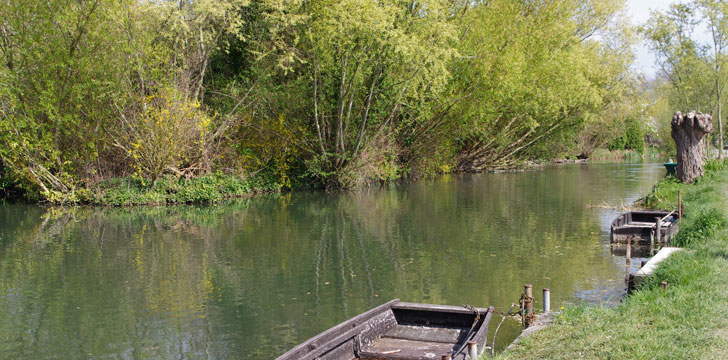
Below the old town, the Bourges marshes cover 135 hectares. This former wetland is divided into plots where owners cultivate vegetables and flowers, creating a quieter, greener counterpart to the streets above. The area was classified as a natural monument and site in 2003.