
Things to see in Blois
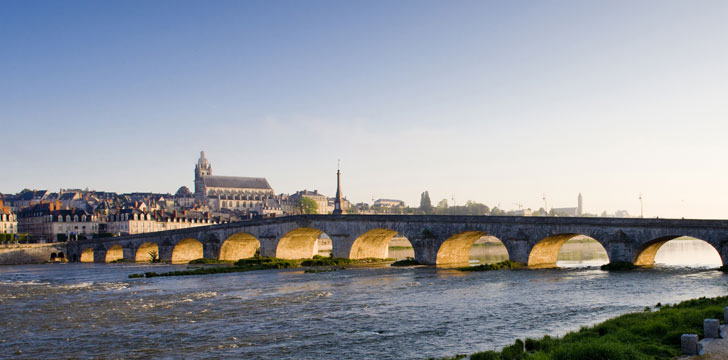
Blois stands beside the Loire in central France, with much of its historic character concentrated around the royal château and the streets below it. Medieval structures, Renaissance façades and buildings from the twentieth century sit within a relatively compact cityscape. The result is a useful introduction to the changing architecture of the Loire Valley rather than a town defined by a single period.
The royal quarter
The Château Royal de Blois began in the Middle Ages and became closely associated with the kings of France during the Renaissance. Its different wings bring Gothic, Renaissance and Classical architecture into one complex. Restored and furnished royal apartments help explain how the residence was used, while the façades make the château’s long construction history visible from outside.
Opposite the Loges façade of the François I wing, the Jardin de Simples et de Fleurs Royales occupies part of the former royal gardens. Gilles Clément created the present garden in 1995 as a contemporary response to the Renaissance building. Almost two hectares are arranged over four terraces: the Jardin des Simples, Jardin des Fleurs Royales, Jardin des Lices and Bastion du Roy.
The Maison de la Magie adds a more recent chapter to this area. Opened in 1998, the museum honours Jean-Eugène Robert-Houdin, the nineteenth-century illusionist born in Blois. Its subject is stage magic, approached through collections, posters on the history of the art and conjuring performances.
Old streets and defensive remains
Rue Saint-Lubin, close to the château, is lined with surviving houses in timber and stone dating from around the late fifteenth and early sixteenth centuries. The upper storeys are the principal feature to notice: the buildings at numbers 36 and 38 are listed as historic monuments. Shops and restaurants occupy the street at ground level, but the older fabric remains clear above them.
Tour Beauvoir provides a different trace of medieval Blois. Built in the eleventh century as the keep of the lords of Beauvoir, it originally had no entrance at street level; access was by ladder to the first floor. The adapted roof terrace looks across the city towards the royal château.
The thirteenth-century Couvent des Jacobins has lost much of its original interior, although exterior walls, courtyard remains and part of the cloister gallery survive. The complex is also associated with the city’s natural-history and religious-art collections.
Church architecture across the centuries
Cathédrale Saint-Louis developed through repeated rebuilding from the Middle Ages into the Renaissance and is generally characterised as late Gothic. It attained cathedral status in 1697. Its most recognisable external feature is the bell tower on the north façade, which rises above the town.
Notre-Dame de la Trinité belongs to a markedly later period. Built between 1934 and 1949, the basilica uses the architectural language of the interwar years rather than the Gothic and Renaissance forms seen elsewhere in Blois. Its plain, tall bell tower contains a carillon known in the region.
Near the château, the early seventeenth-century Église Saint-Vincent-de-Paul grew from the chapel of the former Jesuit college. It belongs to the Counter-Reformation period and contains liturgical objects and an elaborate altarpiece. Together, these churches show how the city continued to build around its royal and medieval core long after the Renaissance.